Excerpts from
The
Life Magnet Vol. 3
by
Robert Collier
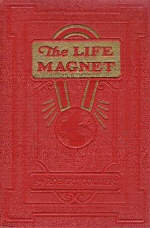
Order in Adobe PDF eBook or printed form for $5.95 (+ printing charge)

Book
Description
This is part of a set of 7 books that Robert Collier
published in 1928 as a follow-up series to his highly successful
"Secret of the Ages.". The first 2 books in this series were entitled
"The Secret of Gold", and the remaining 5 were entitled "The Life
Magnet." Original copies of this series are now very hard to find.
The chapter titles of this volume are:
Chapter
1
- What Are We Here For?
Chapter
2
- Prayer
Chapter
3 - The Unpardonable Sin
Chapter
4
- The Covenant
Chapter 5 - The
Sowers
What These Books Will Do for You
"The Life Magnet" will show you how
to get what you want--how to draw to yourself riches and power
just as surely as the magnet draws to itself every filing of iron that
comes within its reach. There is nothing of good you can ask for, that
it cannot bring you.
Scientists tell us, you know, that all mankind is created
equal----that
the brain of one man is exactly the same as that of another. The only
difference between a failure and a successful man is that the
successful man's brain is more developed.
But here is the important part--These scientists tell us
that no
man has found the way to use more than one tenth of
the giant power of his brain. And the prime purpose of "The Life
Magnet" is to point out in plain language the way to harness the vast
reserve power of this Giant Inside You--the way to use it to
bring you whatever you want.
There are no vague theories in these books. They show you
first
just
what is this giant unused power within you, then how to reach it and
finally how to make it work for you every day and hour.
Chapter
1
What
Are We Here For?
"Arise, shine;
for thy
light is come, and the glory of the Lord is risen upon thee." —Isaiah
60:1.
ONE of the early Christian
missionaries to Britain was
addressing a conclave of the tribes, gathered at night in a rude hall,
made of
branches covered with skins and open at each end. He spoke eloquently
of the
one God. He told them of the Saviour. He pictured the joys of a
future life.
As he finished, suddenly out of
the night there swooped a
great bird, fluttered for a moment over their heads, then
disappeared into the
blackness beyond.
All were silent—awed,
impressed. Then an old Chief arose.
"You
tell us of one God," he said. "We believe in another. You tell us of
a Heaven where the just and the meek go. We believe in a Valhalla for
the brave
and the fair. But who has ever come back from beyond to say which is
right?
"Life is like that bird which
flew through here. It
comes from none knows whence. It stays with us an all too brief moment,
then
goes none knows whither. Tell me if you can—what is it all about? What
are we
here for?"
That is the old, old question.
What are we here for? Philosophers
have wrangled over it since time began. And few indeed have been the
acceptable
answers.
But one thing we can be sure
of—we are
put on this earth to
progress. All through history, all
through
nature, all through life, we can
see evidences
of this on every side. Whenever a
nation becomes
too self-satisfied, whenever a man or an institution walls himself
around to
shut out new ideas, whenever a plant stops growing—it is a sure sign of
decay
and death. We must go forward—or die. We can't stand still. Time is
ever
moving. We must keep up with it—or perish.
Professor Michael Pupin, famous
scientist, in an interview
published in the American Magazine, says: "Science finds that
everything is a continuously developing process. It reveals man as a
being with
a soul which is progressing more and more toward Divinity.
"Here's my opinion. . . our
Physical life is only a
stage in the existence of the soul. . . . The human soul goes on
existing—and
developing—after death."
What do
you live for? You might ask nine-tenths of the people in the world, and
all
they could tell you would be: to work to buy food and clothing and
shelter, so
I may gain strength to work tomorrow to buy more food and clothing
and
shelter. And that is as far as most of them ever get. The endless round
of work
and eat and sleep, and work and eat and sleep. Is that worth living
for? Is
that any preparation for a future life?
Suppose you sent your son to a
preparatory school that was
to make him ready for College. And instead of giving him the studies
necessary
for his College entrance, the school taught him only carpentering,
or
bricklaying, or plastering, or common day labor. What would you think
of it as
a preparatory school for College?
If our life here is anything,
it is a preparation for the
life to come. It is a preparatory school. You are taught Greek in
school—not
because you expect ever to speak it, not even because some of our words
are
derived from Greek roots, but because of the valuable mental
training its
study gives you. Every College student must learn higher mathematics,
even
though not one in a hundred ever will use anything but the plainest
arithmetic.
Why? For mental training.
We go through experiences here
on earth which apparently
have no purpose, no good in them. We are given obstacles to overcome,
trials
and tribulations to fight our way through. Why? To give us something we
may
take with us to the other side—Character.
"It is written in the Prophets,
and they shall be all taught of
God."—John 6:45.
To quote Dr. Pupin
again—"Everything that happens in this great
universe is for a purpose; and that purpose is the development of
the human
soul."
Accounting, engineering,
mechanics, law, business—none of
these in itself is going to do us any good over there. It is what the use
of
it adds to our perceptive faculties that counts.
It is an unknown country "over
there." There are
no telephones, no electric lights, no automobiles, no courts, no
factories, no
stores. To regard our ordinary avocations as preparation for the
hereafter is
as though a man with a perfect knowledge of typewriters—and nothing
else—were
set down in the middle of the Amazon jungle and left there to live or
die.
Unless he had learned something else from his tinkering with
typewriters
besides mechanics, he would be in a bad way.
But tinkering with
typewriters—or any other job—does teach
higher things to the man ready or willing to receive them. It teaches
patience,
perseverance, honesty, pride in work well done. All the attributes
that,
summed up, spell S-E-R-V-I-C-E.
That is something which is as
welcome in the Brazilian
wilds as here. It is something which pays dividends on the other side
of the
River Styx just as surely as on this—the attitude of mind which is
always
looking for the best way, the most effective way to SERVE others—to
make the
world a better place for his having been in it.
"And they that be wise shall
shine as the brightness
of the firmament; and they that turn many to righteousness as the stars
forever."—Daniel 12:3.
Stewart Edward White had a
story in the May American of
a man who, to all intents, had died. And in that hazy limbo between the
new
world and this, the thing that worried him was his utter nakedness—his
complete
lack of any trait he might carry over from our world into the beyond.
To quote in part the character
in the story—
"Here is how it seemed to me;
"There I was,
temporarily inactive, but convinced that sooner or later would
participate in
whatever there was. And I knew there was something to participate
in. There
was an environment. I couldn't become cognizant of it because I had not
the
proper development to possess senses that would take it in. I had
no
equipment. I was like a baby.
"It came to me with rather a
shock of illumination
that my appreciation of even this much was due solely to the fact that
I had
gotten something spiritual out of my earth life.
"Perception was one of them.
And I realized with a
kind of sinking feeling that if I had not brought over that much, I
would
probably be unconscious—perhaps just dormant like a seed, waiting
for
something to germinate me."
"Waiting for something to
germinate me." Isn't
that the way most of us are even here—waiting for some force
outside ourselves
to come along and start us into action? Are we going to carry that same
inactivity, that same lack of initiative over to the other side?
We will unless
we speedily learn to bestir ourselves.
A noted criminal judge once
said that he had yet to meet
the man who had not some good in him, some redeeming trait. He thought
once he
had found him—a man hard as iron, a murderer and a thief.
Yet out in the chain gang,
working on the roads, that man
risked crippling or death to save a little child!
So we all take something with
us across the Great Divide,
something that, with sufficient exercise and help, may germinate
there and
enable us to grow in time to the stature of God's children. But how
much we
have to start on and how fast we grow, depends upon the faculties we
acquire
here that are of use on the other side.
In the
gold rush to
the Klondike in the Fall of 1898, no man was allowed across the
Chilkoot Pass
unless he carried with him $1,000 and a ton of provisions. The Canadian
authorities
wanted no "foolish virgins" on their hands to provide for. Each man
must carry with him the requisite money and provisions to supply him through the
winter—or
go back home.
Death is the Chilkoot Pass
across which each soul must
travel to reach the Land of Promise beyond. But there are no Northwest
Mounted
Police to turn you back if you cross without provisions and without
equipment.
You are allowed to go through—but not to the Promised Land, To Hell
instead.
That Hell is not a place of
fire and brimstone. Rather it
is one of darkness and loneliness. Those in it have failed to carry
over any
perceptive faculties, and without them they cannot find their way to
the
Promised Land.
Do you know what "Hell" means?
The word used for
it in the New Testament is "Gehenna," and it comes from the Vale
of
Hinnom, which was a dump-heap outside the city walls of Jerusalem.
Hell is the place for waste and
useless material. Hell is
the place for those who cross the Great Divide without anything
that can make
them useful on the other side. Hell is the dump-heap of useless souls.
At a little wayside station up
in Northern Michigan, a
lumber jack was waiting, an old grain sack over his shoulder with his
spare
clothes and belongings in it. Seeing a fellow traveler eyeing the
meager load,
he explained tersely—"This old sack holds all I've been able to
accumulate
in sixty-two years."
What is in your sack? What have
you that you can take with
you over the Great Divide? Blue blood won't help, you know. Nor a bank
account.
Eloquence or mechanical skill or salesmanship count for nothing in the
country
beyond.
What have you added to the
world's knowledge? What have you
done to help your fellow man? What noble thoughts have you added to
your mental
store, what kindly deeds, what unselfish service?
Those are the things that count
"over there."
Those are the riches you can take with you to clothe your nakedness, to
start
you in your new life, to give you that faculty of "Perception" which
shall enable you to see your way to the Promised Land.
"He that findeth his life shall
lose it; and he that
loseth his life for my sake shall find it."—Matthew 10:39. In other
words,
he that works only for his own aggrandizement shall lose all that
he makes.
But he that loses all thought of self in the service of others shall
thereby
serve himself, too!
What is that you say? You have
been one of God's poor all
your life? What good is that? The poor have no better chance over there
than
have the rich. The ceaseless grind for a bare livelihood is as stunting
to the
soul as the ceaseless grind for wealth. There must be more to your life
than
that. There must be a ceaseless search for the wealth of the soul, a
ceaseless
reaching out to God, a ceaseless effort for understanding and
knowledge of
the Father. "Acquaint now thyself with Him and be at peace. Thereby
good
shall come unto thee."— Job 22:21.
The Father is not poor. He is
not sick or weak or
afflicted. And He is not proud of any of His children who boast of such
gifts
as coming from Him.
The Father has all riches, all
power, all life, and those who
"acquaint themselves with Him" share in His gifts. When you live
in
the Father, it will make little difference to you whether you live in
Him on
this plane of existence or another. When you depend on His
bountiful law of
supply for your subsistence, on His love and protection for your
happiness,
you will know that "My God shall supply all your needs, according to
His
riches."—Philippians 4:19.
I read the other day of a
mother whose daughter was killed
in an automobile accident, just after she had begun a
wonderfully useful
work. Did the mother repine? Did she sit down and waste away with
grief?
No—she decided that the way she
could best help her
daughter was to carry on her work for her. She would take her
daughter's place.
In spirit, in planning, in everything she did, she tried to put
all her
daughter's energy and her daughter's efforts into the work, with the
result
that not only is the work itself a complete success, but the mother is
a new
woman—rejuvenated and happy. Her daughter lives again in her.
And if there is any way that
the souls of the departed can
be helped, if the faculties they have carried over with them can
be made to
germinate from without, that is the way—to carry on for them here the
work that
would have developed those, very faculties.
When father or mother or loved
one dies, prayer may help
them, but far better than wordy petitions is to send them riches
they can use
in the world beyond—the riches of service you are doing in this world
in their
name.
When Marshall Field died he
left the bulk of his fortune to
his children. But it was not to be given them at once. Part they were
to
receive immediately. The rest only as they proved themselves ready and
worthy.
When they did so-and-so, they were to receive such-and-such.
The Father above left a far
vaster fortune to each of us
than that acquired by Marshall Field. But He put the same restrictions
upon it.
All are given a certain amount without effort, but
thereafter, we receive
only as we prove the law. There is no limit to the amount of the
fortune. The
only limit is in our ability to prove ourselves ready to receive
it.
The
Kingdom of Heaven
The glory of life is in our
mastery of it. We are put here
to prove ourselves—to wash away the dross, to refine the gold in
the fire—and
to the extent that we prove ourselves, to that extent we win to the
Kingdom of
Heaven, here and hereafter.
For the Kingdom of Heaven is
not some occult place we can
enter only through the gates of death. On the contrary, unless we
can win to
some measure of it here, we shall find it a long, hard trail to win to
it in
the hereafter.
"The Kingdom of Heaven is
within you," said
Jesus. Until He came, mankind had been taught that circumstances
were the
result of causes outside ourselves. Jesus showed that all
circumstances are
within our own control. Instead of being under the control of some
malign
fate, under the influence of some natal star, the reverse is true. "And
he
that overcometh and keepeth my works unto the end, to him will I give
power
over the nations, and I will give him the morning star."—Revelations
2:26-28.
But granting that the Kingdom
of Heaven is within us, what is it? "The Kingdom of God is as
if a man should cast seed
into the
ground," said Jesus, "and the seed should spring and grow up, he
knoweth not how. For the earth bringeth forth fruit of herself: first
the
blade, then the ear, and after that the full corn in the ear."—Mark
4:26-28.
To go back to the man in
White's story: "I used to
know a man who suffered a stroke of paralysis. All he could move was
two
fingers in his left hand. Instead of getting discouraged, he said to
himself:
'Well, all right, I'll move those two fingers!' So he did. And by and
by he
found he could move the next finger. Today he's almost as good as ever.
"That's the way I felt. I got a
sudden glowing
conviction that if I exercised what faculties I had, I'd speedily
develop more
faculties."
The seed of the Kingdom of
Heaven is love—unselfish love.
The stalk is service. The golden grain is riches and happiness.
The stronger the
stalk—the more ears of golden grain.
"Seek ye first the Kingdom of
Heaven, and all those
things shall be added unto you," said Jesus.—Matthew 7:33. Seek first
the
seed of love, plant it in the soil of work, water it with genuine
interest in
your fellow man, and the stalk of service will speedily spring up, to
bring
forth golden grains of reward.
"The Kingdom of Heaven is like
unto a treasure hid in
a field, the which when a man hath found, he hideth, and for joy
thereof goeth
and selleth all that he hath, and buyeth that field."—Matthew 13:44.
When a man learns the joy of
genuine service, he will
gladly give up all that he has for it. He will guard it jealously as
his
dearest treasure.
Henry Ford was offered a
billion dollars for the Ford
Company. He refused it. Not because he wanted to make more money—a
billion
dollars are more than any man can spend in one lifetime, more than he
wants to
leave to his children—but because that company represented to him the
most
valuable thing in life, his means of service to his fellow-man.
Hundreds of men have refused
the most generous offers for
their businesses—for the same reason. To the extent to which you find
that
reason—to that same extent you have justified your existence, to that
same
extent you have discovered the Kingdom of God.
Hold on to it, for as much of
it as you take with you
across the Great Divide—that much will serve you as seed to plant
on the
other side, seed that will germinate and grow and bring forth an ever
more
abundant harvest.
Don't let it slip from your
fingers merely because you have
already reaped a golden harvest. That is the very time you can sow most
surely
for the future. You no longer need to worry about money. Now you can
sow for
happiness.
So, you millionaires and
successful men about to
retire—take heed! There is no retiring. You must keep going
forward—or lose
what you have. Perhaps not in money, but in that which is far more
valuable
than money—the seed you are to take to the other side.
That seed decays with disuse.
Keep sowing it—and reaping
it—and what you no longer need to sow for riches, sew for happiness
instead.
You will find that harvest not only more bountiful, but more satisfying
and more
easily carried over the Great Divide.
It is not necessary that you
stick at your desk. It is not
even necessary that you stick at your business. But it is necessary
that you
hold on to the idea of service to your fellow men.
What are we here for? To
discover the Kingdom of Heaven —to
carry its seed with us into the next great phase of existence.
"I am Alpha and Omega, the
beginning
and the end. I will give unto him that is athirst of the fountain of
the water
of life freely. He that overcometh shall inherit all things."
—Revelations 21:6,7.
"And behold, I come quickly;
and my
reward is with me, to give every man according as his work shall be."
—Revelations
22:12.
Order complete book in Adobe PDF eBook or printed form for $5.95 (+
printing charge)
|